How to Make Cold Brew Coffee
A simple, fool-proof method to make your own cold brew coffee at home — no fancy equipment needed! Yields a strong, smooth concentrate.
Print
Pin
Ingredients
- 1 cup coarse-ground coffee
- 4 cups filtered water
Equipment
- Large jar pitcher, or other container (at least 5 cup capacity)
- Fine mesh sieve
- A second layer of filtration such as: a basket-style paper coffee filter, reusable cloth coffee filter, clean handkerchief, nut milk bag, a few layers of cheesecloth, etc.
Instructions
- Add coffee grounds and water to your pitcher, mason jar, or other container. Give it a stir to ensure that the grounds are evenly saturated with water.
- Cover the container, place in the fridge, and allow to cold brew for 18-24 hours.
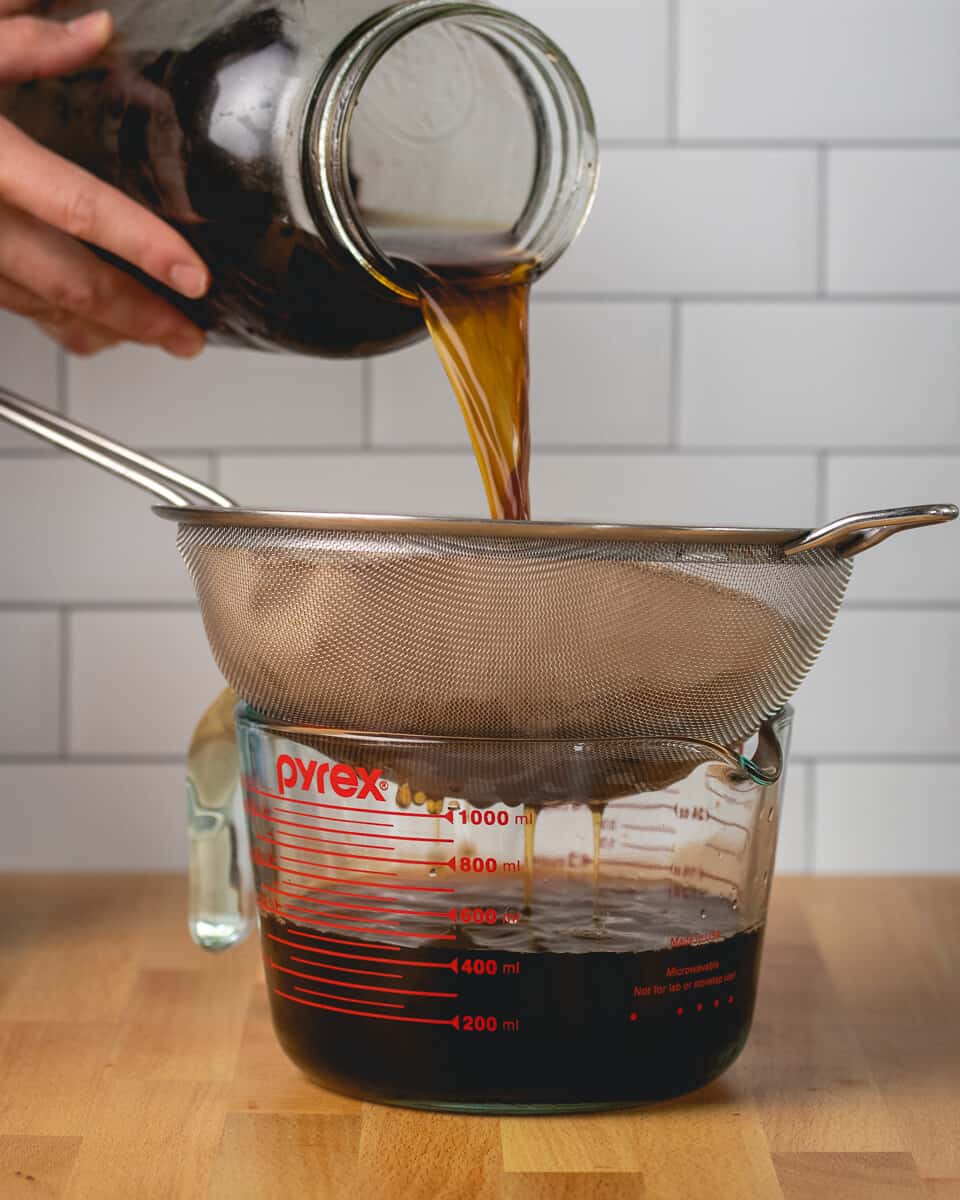
- Place your mesh sieve over a bowl, pitcher or other vessel large enough to hold 4 cups of liquid. Line the sieve with your second layer of filtration.
- Pour cold brew through sieve to filter.
- You'll be left with a cold brew concentrate that can be diluted to your preference with water, milk or creamer. I typically enjoy a 1:1 ratio of concentrate to water, but experiment to find your perfect cup.
- Transfer the cold brew concentrate to a pitcher, jar or jug that has a lid. It keeps well in the fridge for up to 2 weeks, but it will taste best if you drink it within the first week.
Notes
Grind size: Coarse ground coffee works the best for cold brew, similar to what you'd use for a French press. If you don't own a coffee grinder, most grocery stores will have one available to use in the coffee aisle. If you purchase beans from a local coffee shop, they will usually be glad to grind them for you in-house. Ask the barista to grind them for a French press.
Coffee Roast: I generally recommend medium or darker roasts for cold brew, especially if you are someone who enjoys your coffee with milk or creamer. Cold brewing allows their more full-bodied, robust flavor profiles to shine through. Lighter roasts can certainly work, but some of their more delicate, brighter tasting notes might be muted. Feel free to experiment.
The nutrition information provided on Sarah’s Vegan Kitchen is an estimate and is offered for general informational purposes only. Values will vary depending on the specific brands and amounts used.